Korean Wellness, Explained: Bathhouses, Forest Therapy and Preventive Care
In Canada, we tend to treat wellness as a treat. A spa day for a birthday, a massage when the back finally gives out. In Korea, wellness works differently. It is woven into ordinary life, something you maintain the way you maintain your teeth, and it shows in how people of every age take care of themselves.
That difference is the reason I bring women to Korea. Not for one indulgent week, but to experience a culture where looking after yourself is normal and practical, with real expertise behind it.
The bathhouse habit
Start with the jjimjilbang, the Korean bathhouse. Almost every neighbourhood has one. Inside you will find hot and cold pools, sauna rooms heated with charcoal, salt or clay, places to rest, and often a snack bar where families spend half a Sunday together.
Koreans do not go to the bathhouse as a luxury. They go regularly, the way we might go to the gym. The famous Korean body scrub, done by a no-nonsense attendant, leaves your skin softer than any product ever will. More importantly, the whole experience builds in something most of us never schedule: a few hours with no phone, warm water, and nowhere else to be.
For first-time visitors, the communal bathing can take a little courage. Every woman I have travelled with who tried it says the same thing afterwards: nobody is looking at you, every body in the room is simply a body, and the self-consciousness you walked in with stays in the locker.
A nation of hikers
Hiking is close to a national pastime in Korea. Seoul is ringed by mountains, and on any weekend the trails of Bukhansan fill with hikers of every age, including grandmothers in immaculate gear who will pass you on the climb without breathing hard. Trails are well kept, well marked and busy, because walking in the mountains is what Koreans do with a free morning.
There is a lesson in that too. Exercise in Korea is rarely framed as punishment for what you ate. It is time outside, usually with company, often ending with a good meal.
Forest therapy is taken seriously
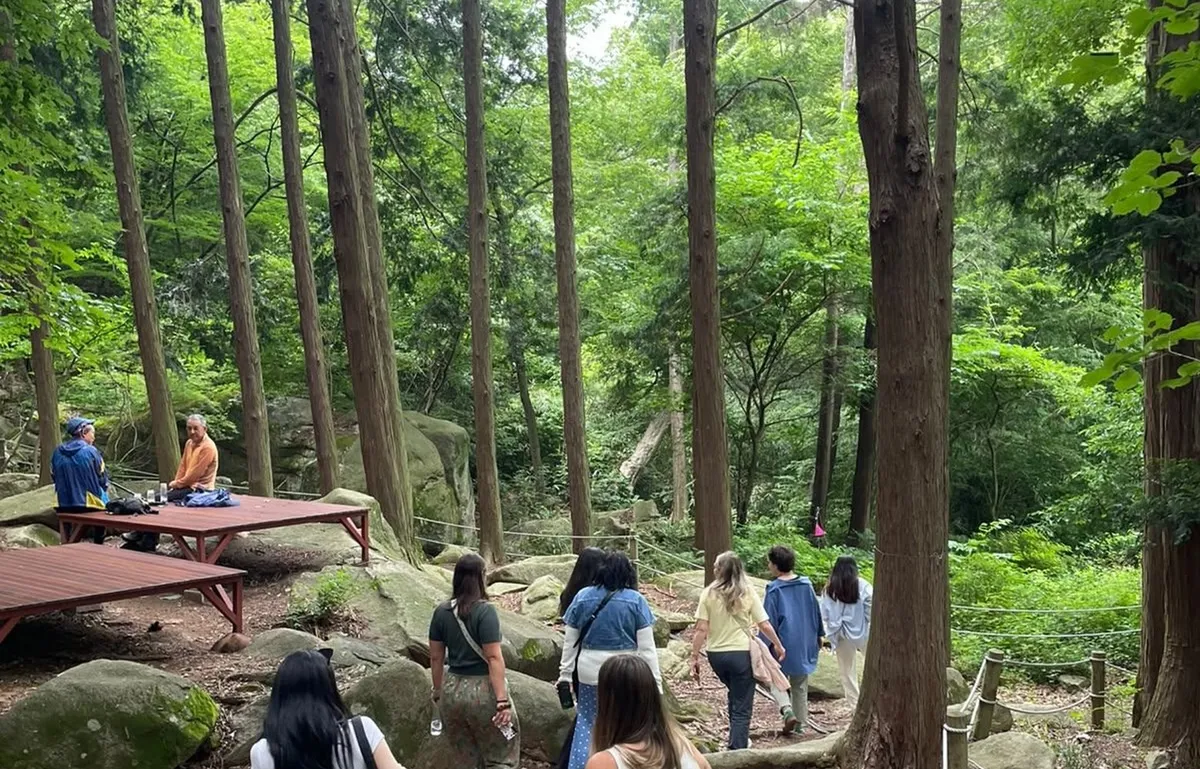
Korea is about 60 percent forest, and spending slow, deliberate time among trees is treated as genuine healthcare there. The national forest agency operates dedicated healing forests across the country, with trained guides who lead gentle walks, breathing practice and rest among the trees.
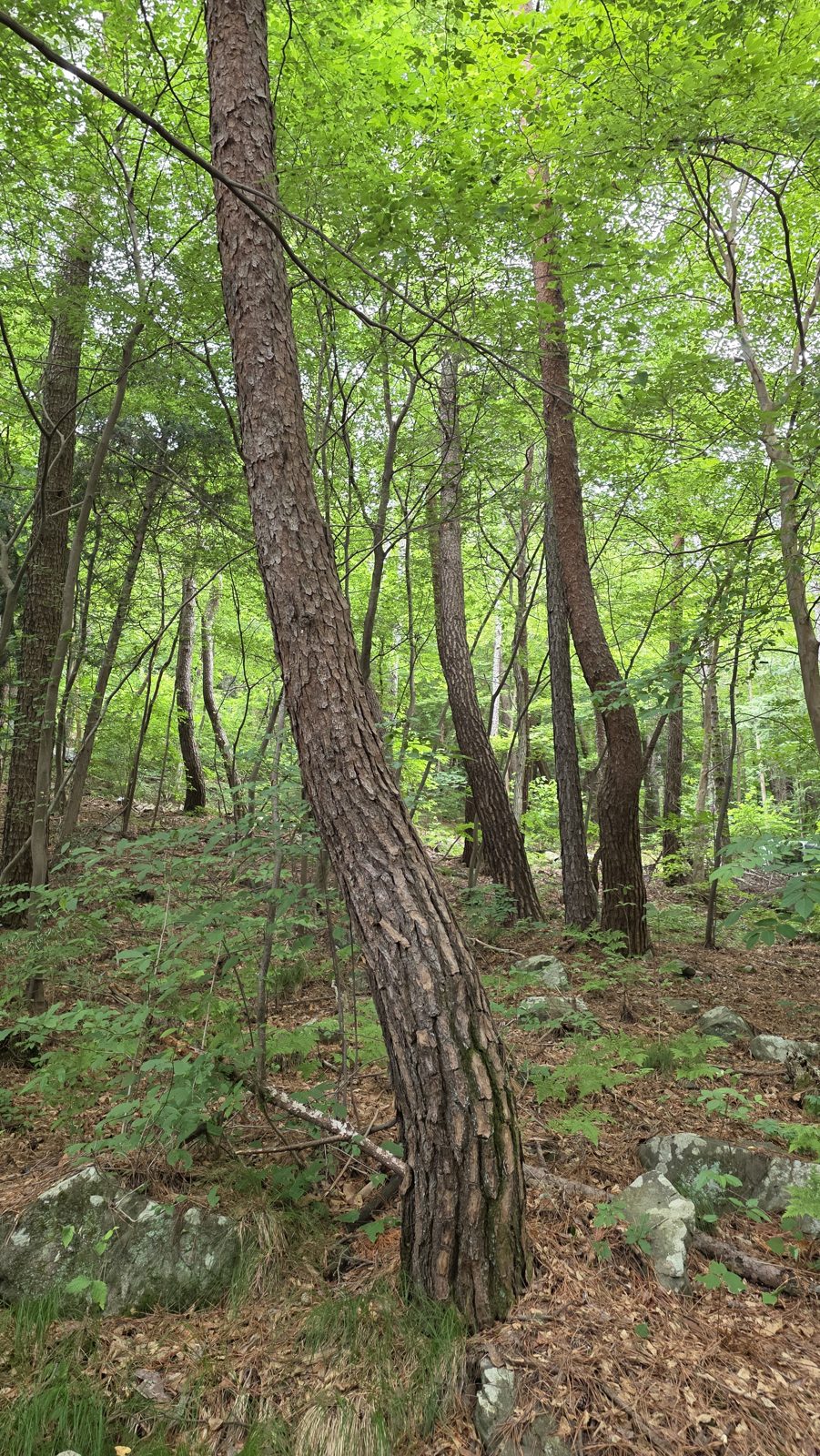
If that sounds soft, consider how you feel after two hours of walking in a quiet forest with no destination and no screen. Koreans did not invent the idea that nature restores us. They built public infrastructure around it instead of leaving it to chance.
Traditional Korean medicine
Alongside modern hospitals, Korea maintains a full system of traditional medicine. Clinics offering acupuncture, herbal consultation and body-constitution analysis are common, regulated and widely used. The approach is preventive at its heart: instead of waiting for something to break, a practitioner looks at your energy, sleep, digestion and stress, and works on balance before illness arrives.
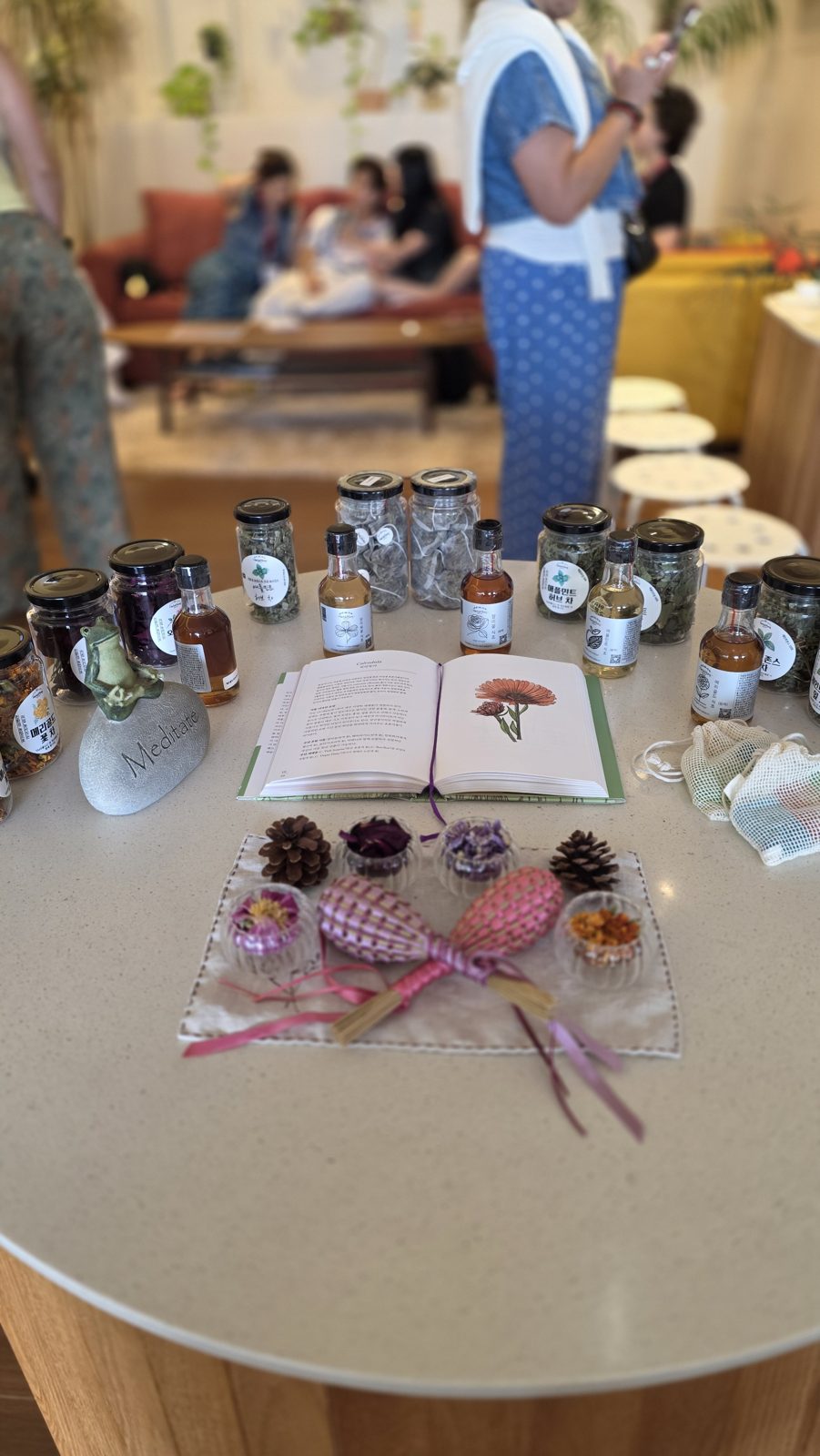
A typical consultation is unhurried. The practitioner checks your pulse, looks at your tongue, asks about your appetite, your sleep and your stress, and then explains what your body seems to be asking for. Treatment might be acupuncture, herbal tea blended for you, or simply advice about food and rest. For many of our travellers, it is the first time anyone has asked that full set of questions about their health in one sitting, and the first time the answer was not a prescription.
A full health check in one morning
Korea is also one of the best places in the world for preventive health screening. Comprehensive check-up centres can complete in a single calm morning what would take months of referrals and waiting rooms at home: blood work, imaging, specialist review, with results explained in English at the international clinics.
Koreans themselves use these centres routinely, because regular screening is part of adult life there, and the facilities are built for comfort rather than fear. Many visitors now plan a check-up into their trip, because it answers a question that weighs on so many of us: am I okay? Several of my own travellers chose this on our last journey, and each of them told me afterwards that the peace of mind was worth far more than the morning it took.
Rest as a skill
What ties all of this together is a simple idea: rest is a skill, and Koreans practice it, in warm water, among trees, at the herbalist, in the sauna. Nobody waits for burnout to begin.
Our Lead From Within journey was built around that idea. We spend two nights at Park Roche, a mountain wellness resort with spa, sauna and included massage. We experience traditional Korean medicine and forest therapy, and travellers who wish can add a preventive health screening at a leading Korean facility. Ten days is not long, but it is long enough to remember what being properly rested feels like, and to bring some of that skill home with you.
Request the itinerary